

Blog
Blog

At Poothali, we have never wanted food to feel like something prepared for a hotel guest.
We would rather it feel like you have arrived at someone’s home in Kasaragod, sat down at the family table, and been asked the most familiar of questions: “Have you eaten?”
That simple question carries a great deal of meaning here. Food is how we welcome people, look after them, introduce them to our place, and often, begin a friendship.
So our kitchen follows a simple idea: we cook for our guests much the same way we would cook for our own family.
What is Kasaragod food?
Kasaragod food is the cooking of Kerala’s northernmost district, where Malayali, Tulu, Kannada, Konkani and Beary communities have lived alongside each other for generations. It is built on rice and coconut like the rest of Kerala, but carries coastal Karnataka influence in its rice breads, its seafood and its spicing. The result is a regional kitchen that differs noticeably from cooking further south.
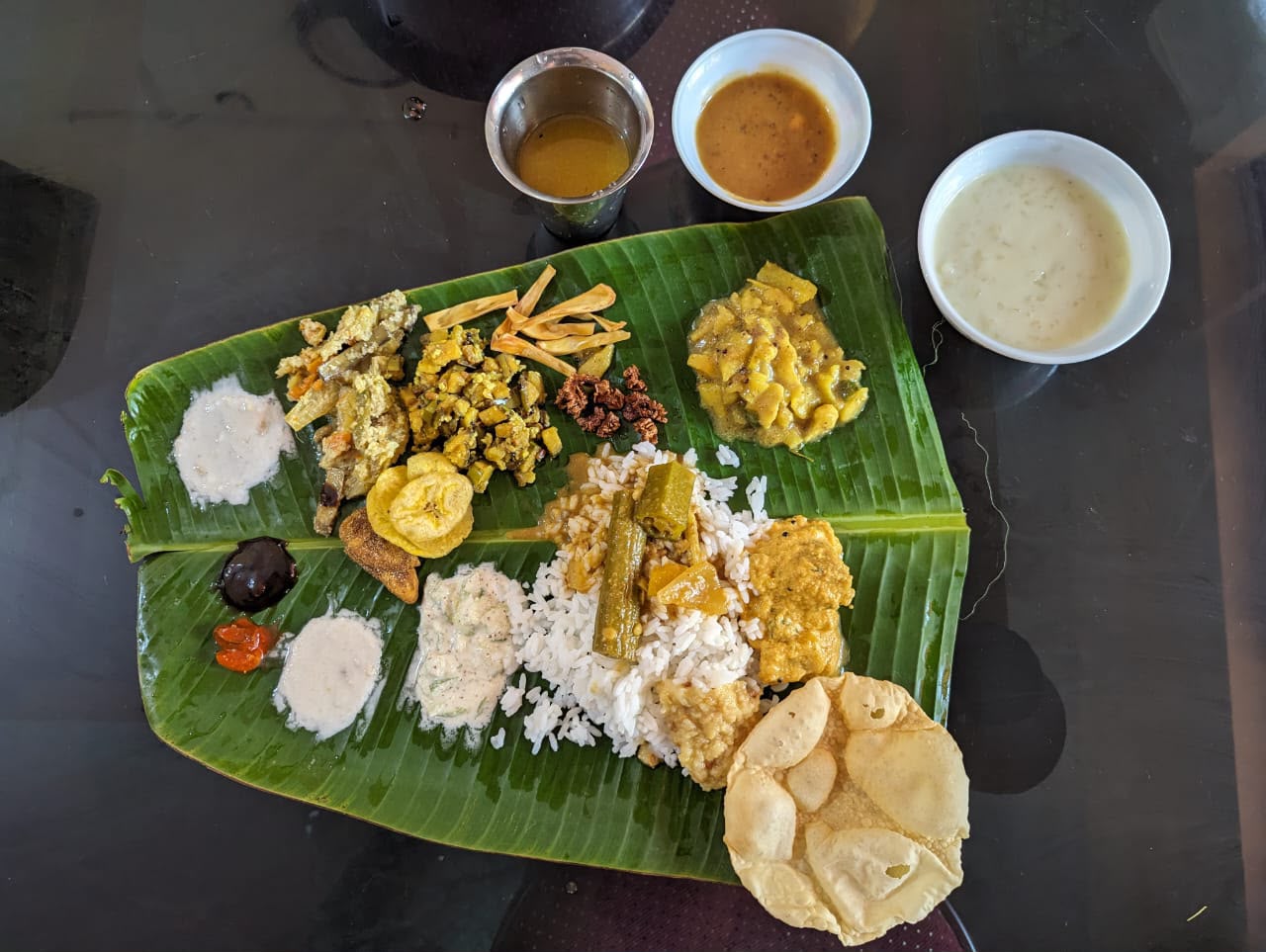
Kasaragod has a food culture unlike anywhere else in Kerala.
We sit at the northern edge of the state, close to Karnataka and shaped over generations by different communities, languages and culinary traditions. The district is known as Saptha Bhasha Sangama Bhoomi, the land where seven languages meet, and that mix is visible in daily village lifelong before it reaches the table.
Malayalam, Tulu, Kannada, Konkani and Beary influences all meet here, and you can often see that history on the dining table.
Five kitchens in one district
There is coconut throughout, of course — grated, roasted, ground into masala or pressed into milk. There are local spices, rice preparations, seafood from the coast and the rivers, seasonal vegetables from the farms around the village, plantains, and dishes whose recipes are still passed from one generation to another.
At Poothali, this is the food we want travellers to encounter. Not a generic version of “Kerala cuisine”, but the food of this particular corner of Kerala.
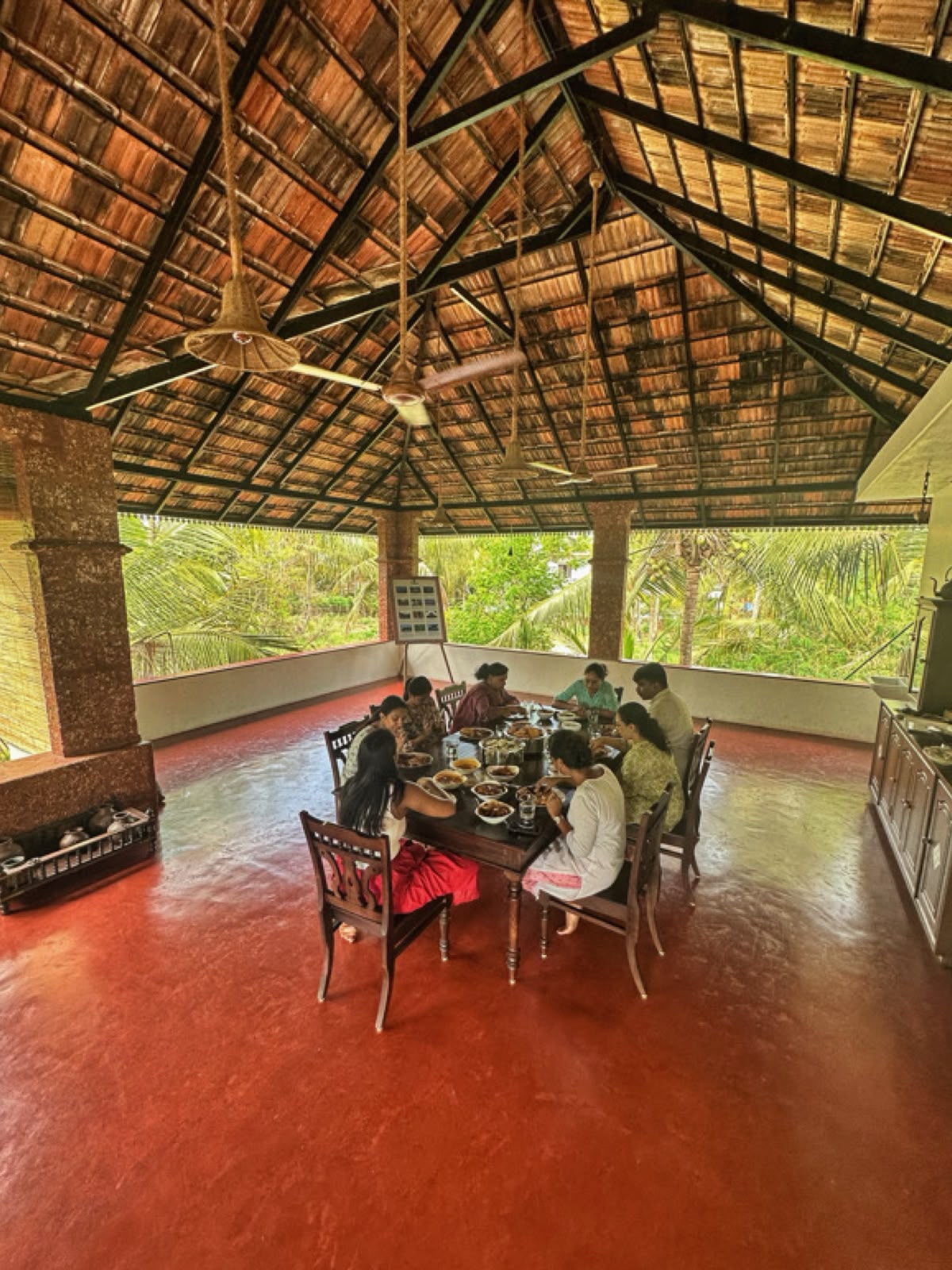
One of the pleasures of eating here is discovering just how diverse the food can be from one household to the next.
Dishes worth asking about
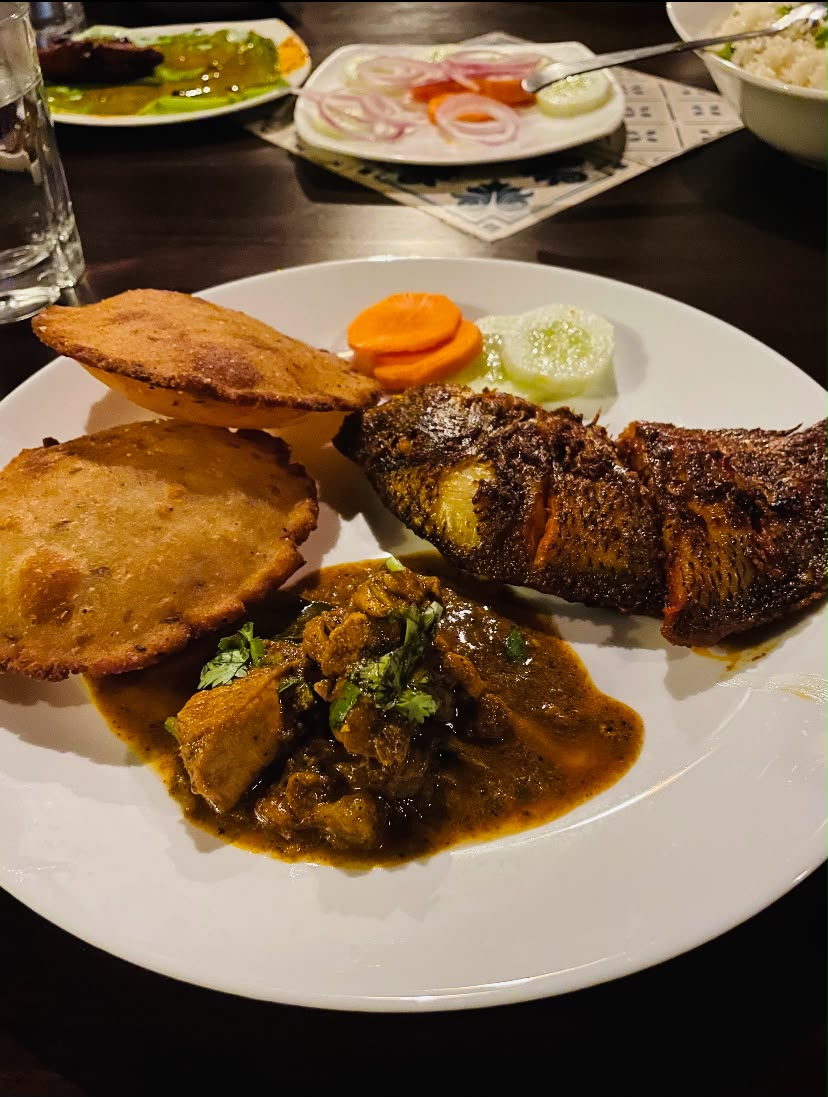
For those interested in the region’s non-vegetarian cooking, North Malabar has a particularly rich repertoire. Fish cooked with local spices, chicken preparations with roasted coconut and masala, and slow-cooked meat dishes all tell something about the families and communities from which they come.
Some are recipes guests may never have encountered before. Others look familiar until the first bite reveals a slightly different spice mixture, preparation or family touch.
This is often where conversations begin.
“What is this?”
And someone from our kitchen starts explaining.
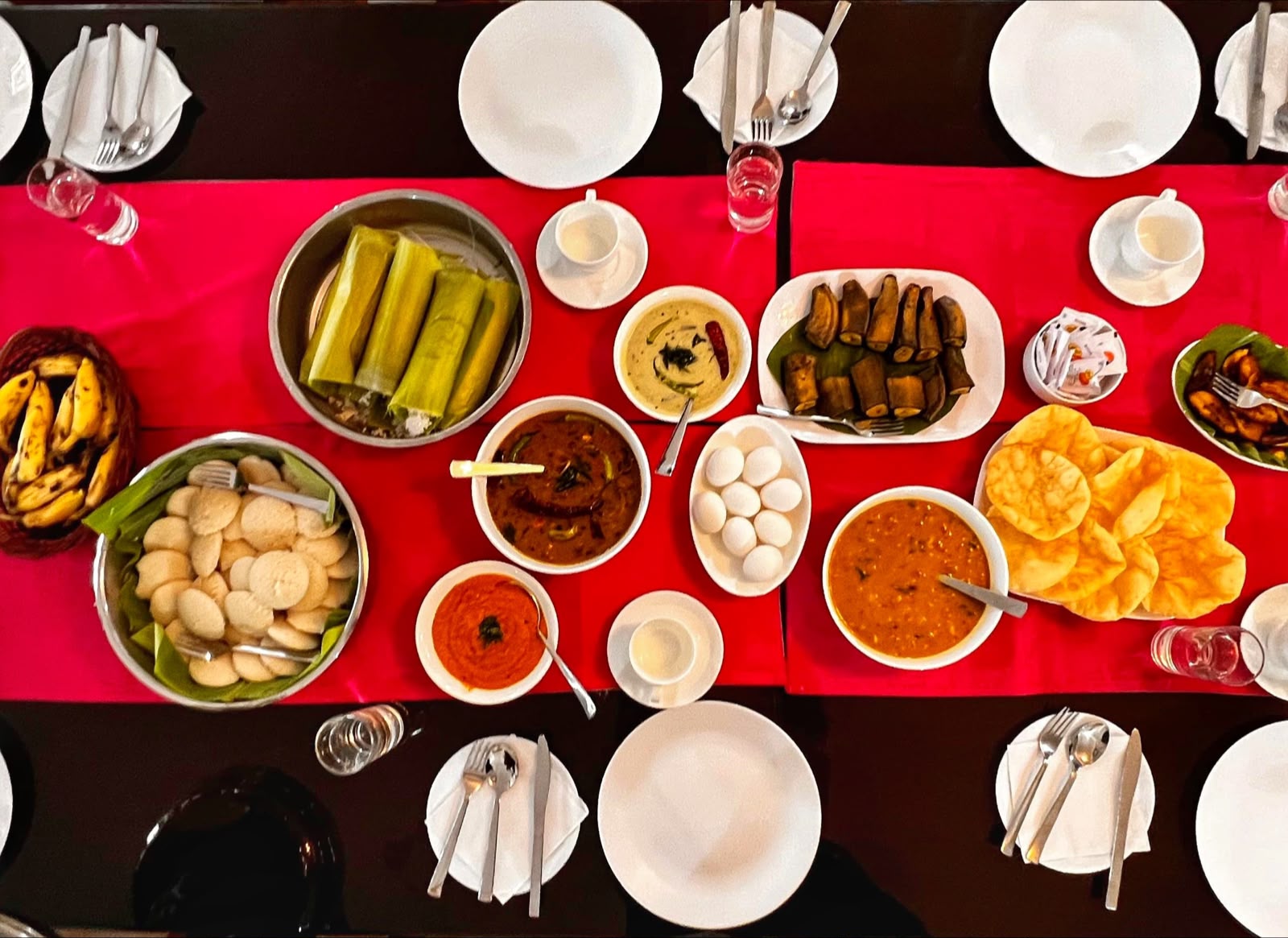
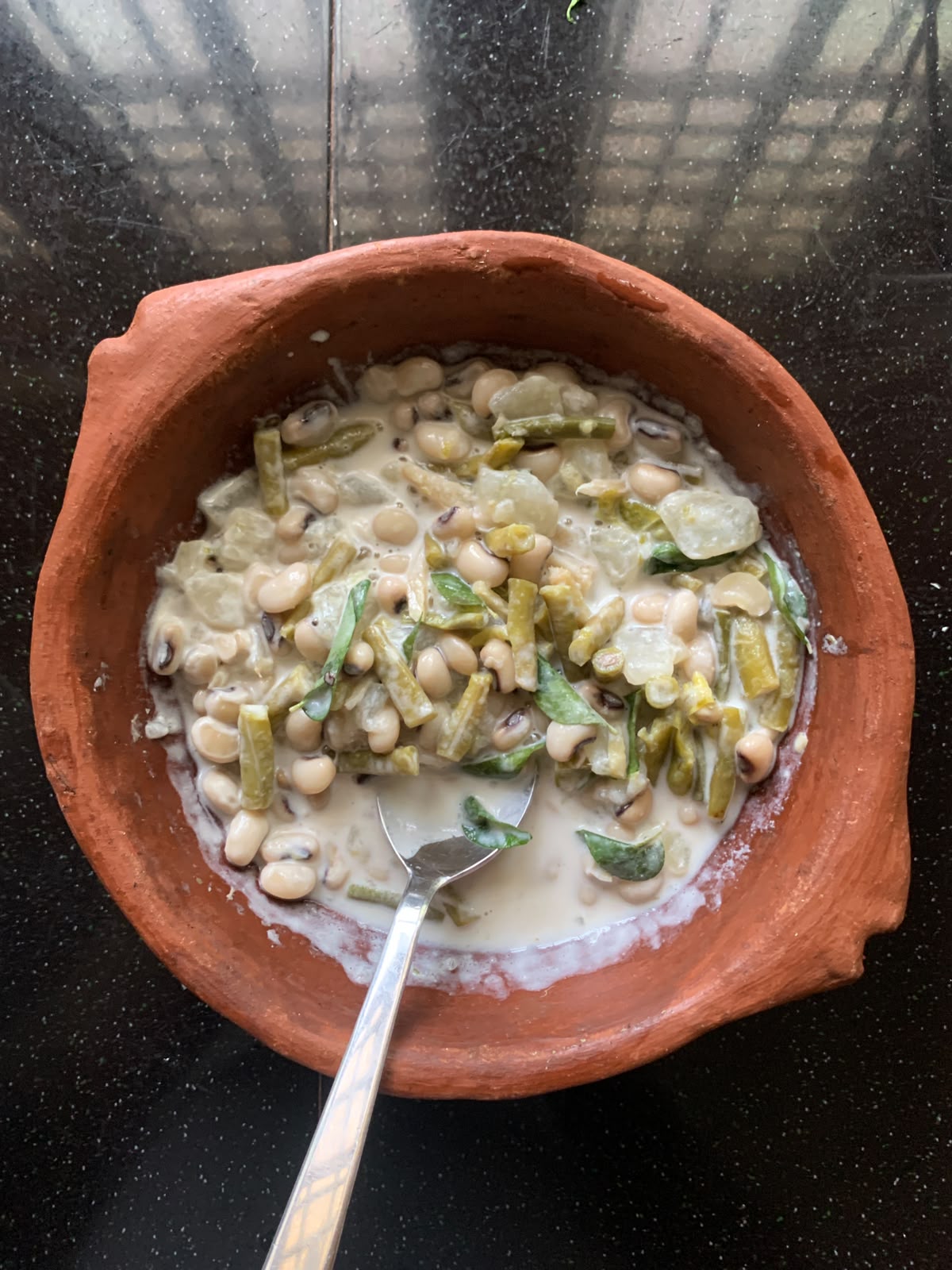
Mornings can begin with the familiar fragrance of rice, coconut and something warm being prepared in the kitchen. There may be puttu and kadala curry, soft appam, idiyappam or dosa, with accompaniments that change according to what is being cooked that day.
We have written about the traditional North Kerala breakfast and where it comes from in more detail elsewhere. Here it is enough to say that breakfast is where most guests meet this food culture first.
A home kitchen naturally changes through the year. When jackfruit arrives there is suddenly plenty of it, mango season brings its own possibilities, and the monsoon makes certain foods feel especially right. Vegetables appear according to what is growing, and the local catch changes too.
After the harvest, new rice reaches the kitchen — and the people who grew it are often the same people we buy from all year.
So we don’t believe every meal needs to look identical throughout the year. What appears on your plate can tell you something about what is happening outside the kitchen.
Ask someone who has cooked in a traditional kitchen for decades for an exact recipe, and you may not get the answer you expect.
“How much coconut?” Enough.
“How long should it cook?” Until it is ready.
There is knowledge in those answers. The cook knows from the smell when the coconut has roasted enough. Fingers recognise whether a dough needs another splash of water. The colour of a curry says whether the masala needs another minute.
That is also why two families can prepare the same Kasaragod dish and produce slightly different results. We think those differences are worth preserving.
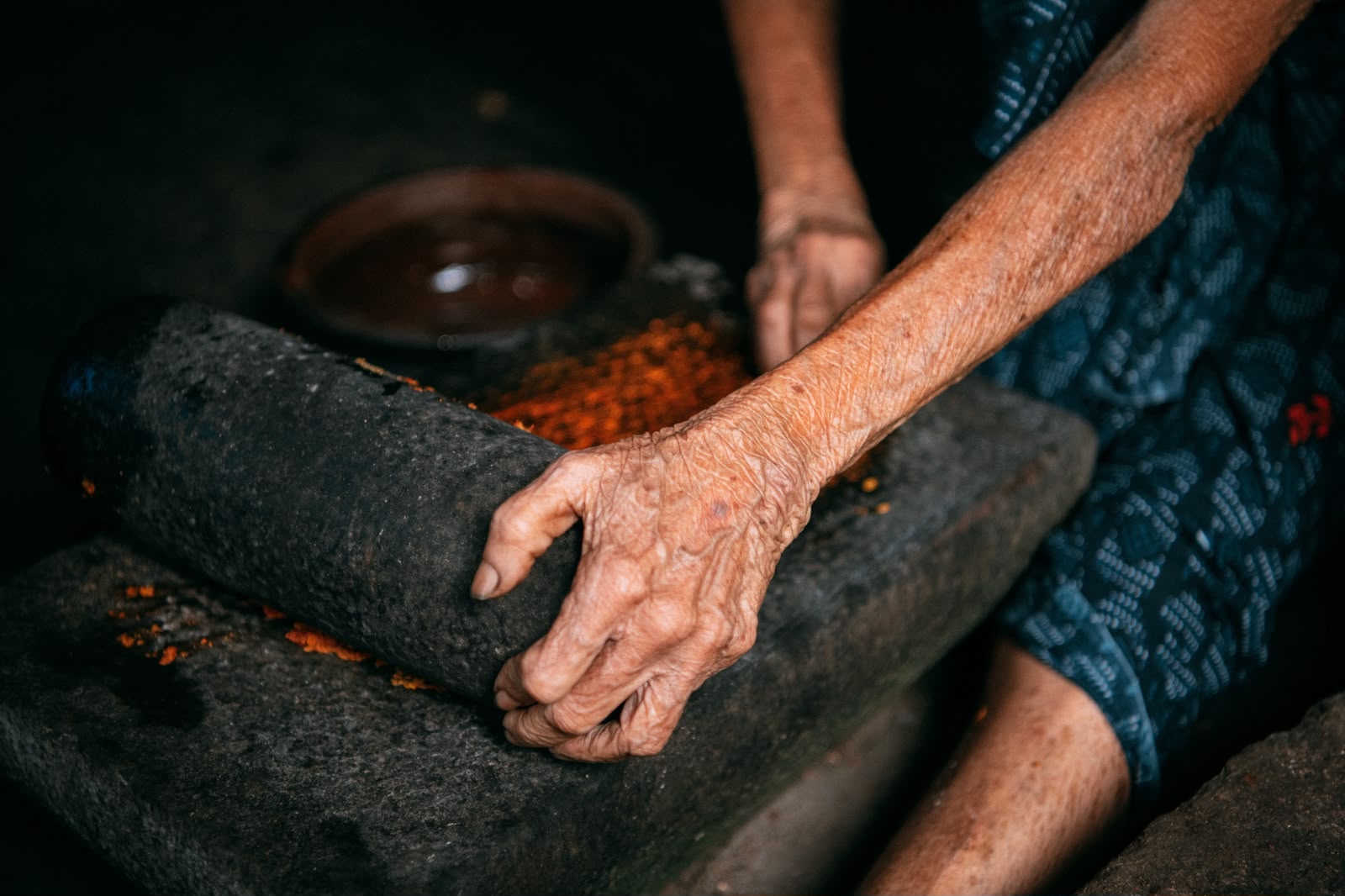
One of our favourite things is when curiosity brings a guest into the kitchen.
They may come looking for another cup of tea and stay to watch coconut being grated. Someone asks how a particular curry is prepared. Another wants to understand a spice they have just tasted.
Soon a recipe is being explained.
There is no formal cooking class and no arranged demonstration. It is simply a kitchen doing what it does every day, with one more curious person standing beside the stove.
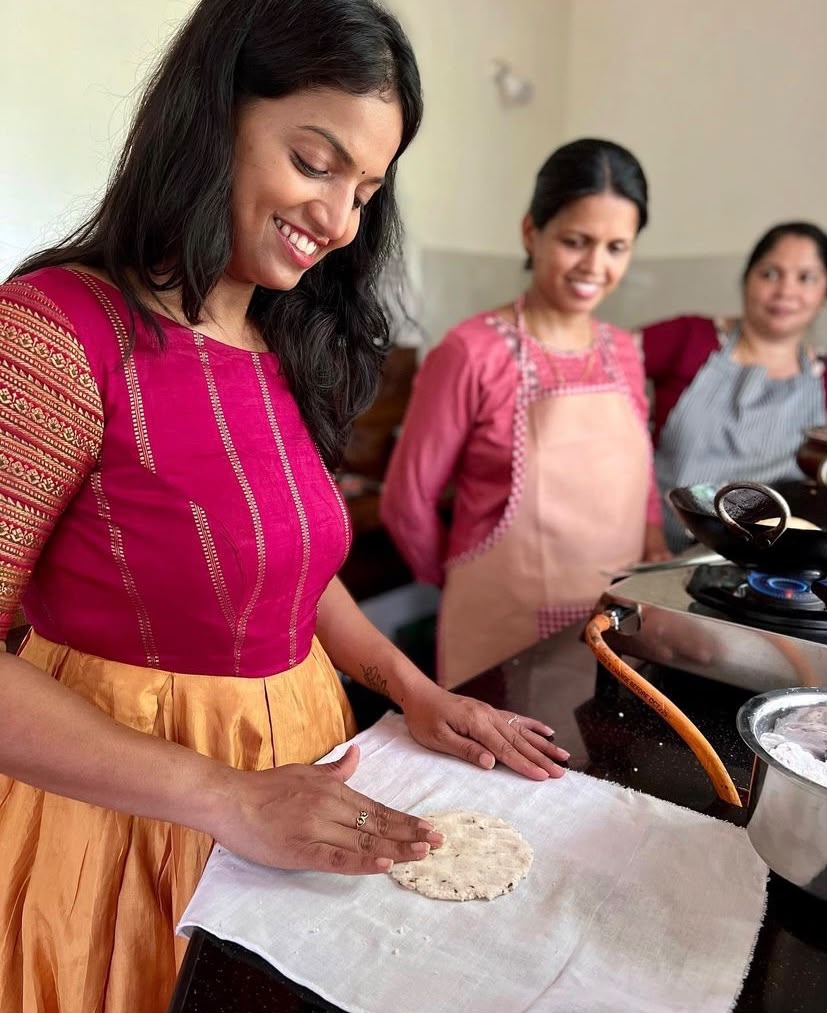
For us, serving local food is not simply about placing an unfamiliar dish in front of someone.
The story matters too.
We want guests to know what a dish is called, what it is made from, whether it belongs particularly to this region, and perhaps who in the family taught us to make it.
Because once you know the story, you taste it differently.
A recipe stops being simply breakfast or dinner. It becomes part of a family, a village and a region — in the same way that the things guests carry home from here stop being objects once you know whose hands made them.
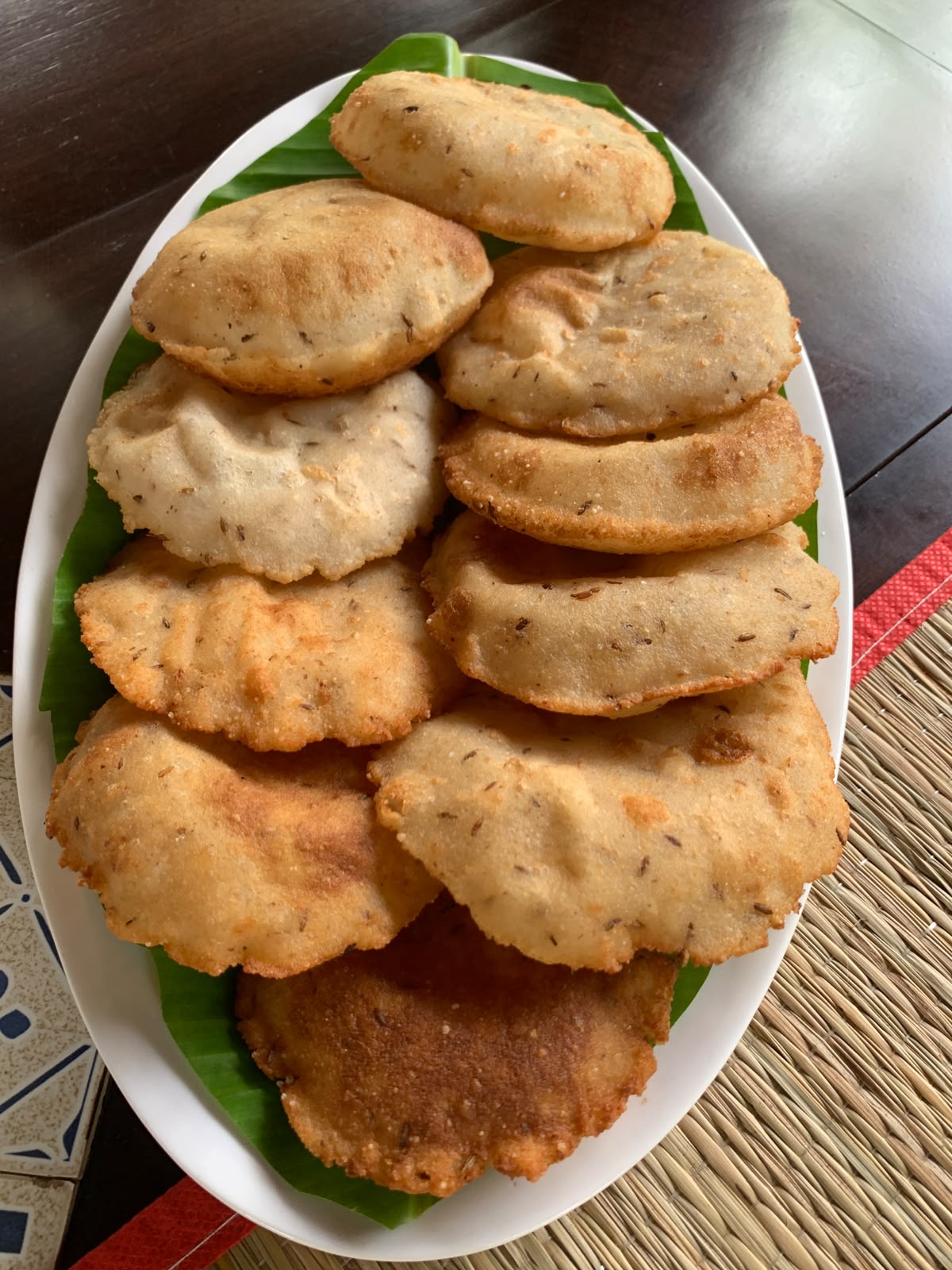
There is a particular moment we love at Poothali. Food has arrived. Everyone has begun eating. Someone asks for a second helping. Another guest wants the name of a dish written down so they won’t forget it.
The conversation moves easily between food, Kasaragod, village life and stories from home — which is most of what happens at this table.
For us, that is hospitality. Not a perfectly arranged plate or an elaborate menu. Just good food from our part of North Kerala, cooked with care in a home kitchen and shared without ceremony.
Because when someone comes to stay at Poothali, we don’t really want to feed them like customers.
We want to feed them the way we would feed someone who has come home.
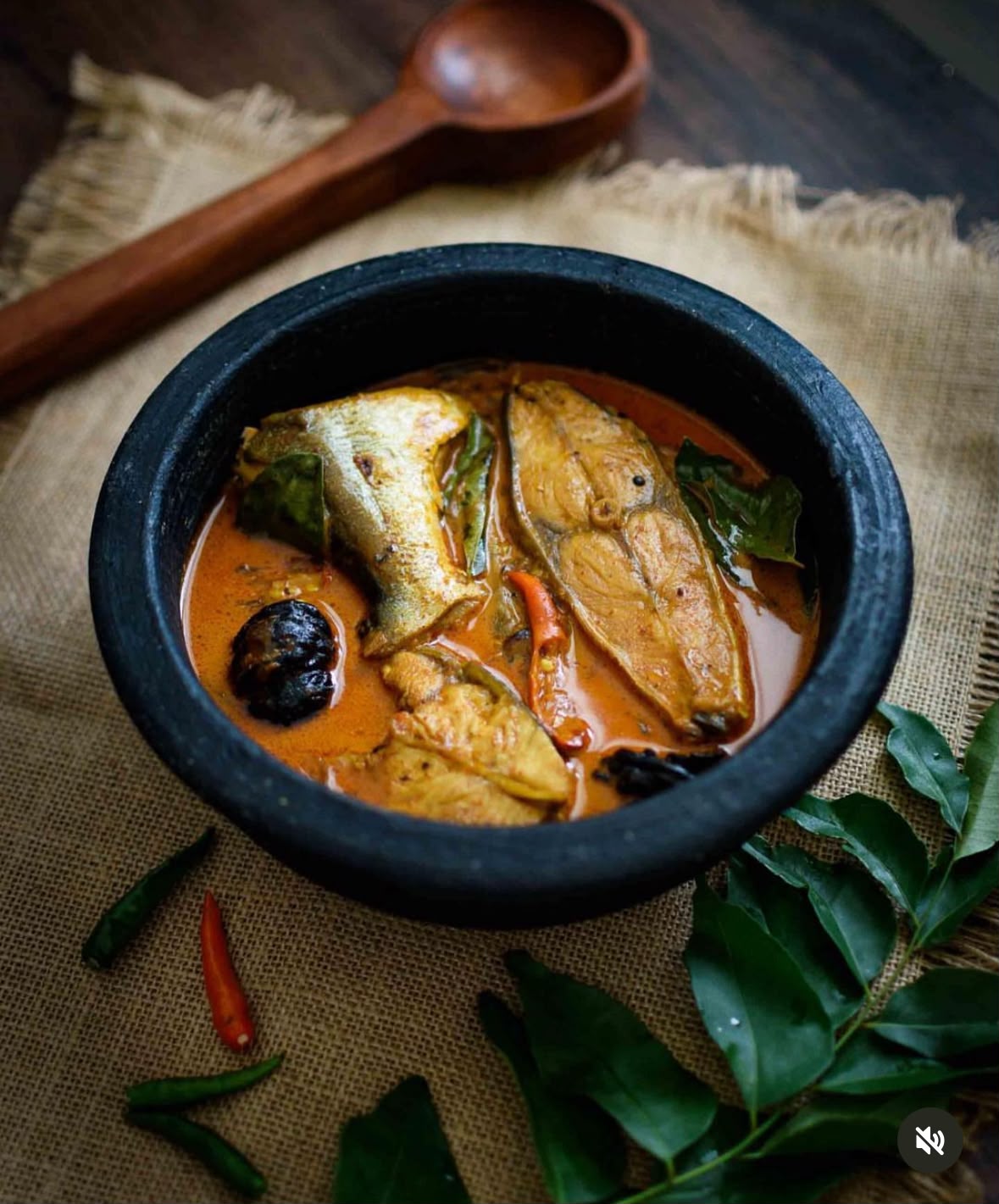
Poothali is an ancestral home in Padannakkad village, near Nileshwar in Kasaragod, looking out over paddy fields. Meals are cooked in the family kitchen and eaten in an open-air dining area, with produce from nearby farms and the day’s catch from the coast.
You can read more about what comes out of that kitchen, browse the experiences around the house, or use our guide to planning a Kerala village tourif you are building a longer trip.
See our rooms or check availability and book your stay.
What food is Kasaragod famous for?
Kasaragod is known for its rice breads — pathiri, neypathal and neer dosa — alongside coconut-based fish and chicken curries, and coastal snacks such as arikadukka, which are mussels stuffed with spiced rice flour. The district’s food reflects Malayali, Beary, Tulu and Konkani cooking all in one place.
How is Kasaragod food different from the rest of Kerala?
Kasaragod sits on the Karnataka border, so its cooking carries coastal Karnataka influence that fades further south. Neer dosa is common here and rare in central and southern Kerala, roasted-coconut masalas appear more often, and Beary and Tulu dishes sit on the same table as Malayali ones. The rice-and-coconut base is shared; the accents are not.
What is Beary cuisine?
Beary cuisine belongs to the Beary community of the Kasaragod and coastal Karnataka region, who speak Beary bashe. It overlaps considerably with Mangalorean Muslim cooking — coconut-rich, strong on seafood, and built around rice in many forms, from breads to pilafs to sweets.
What is neer dosa?
Neer dosa means “water dosa”. It is made from a thin, unfermented batter of rice and water, poured onto a hot pan to make a soft, lacy crepe. Because there is no fermenting, it can be made the same day, and it is usually eaten with coconut chutney, a curry or simply coconut milk and jaggery.
Is Kasaragod food very spicy?
Not usually. The depth in North Kerala cooking tends to come from roasted coconut, from whole spices and from slow cooking rather than from raw heat. Some fish and meat preparations carry real chilli, but most home cooking is aromatic rather than fiery, and a home kitchen can easily adjust it.
Can you eat vegetarian in North Kerala?
Comfortably. Everyday home cooking in the region is largely vegetarian — rice, vegetable curries, coconut-based preparations, chutneys, pickles and rice breads. The Konkani tradition in the district is largely vegetarian too. Meat and fish tend to appear at particular meals rather than at every one.