

Blog
Blog

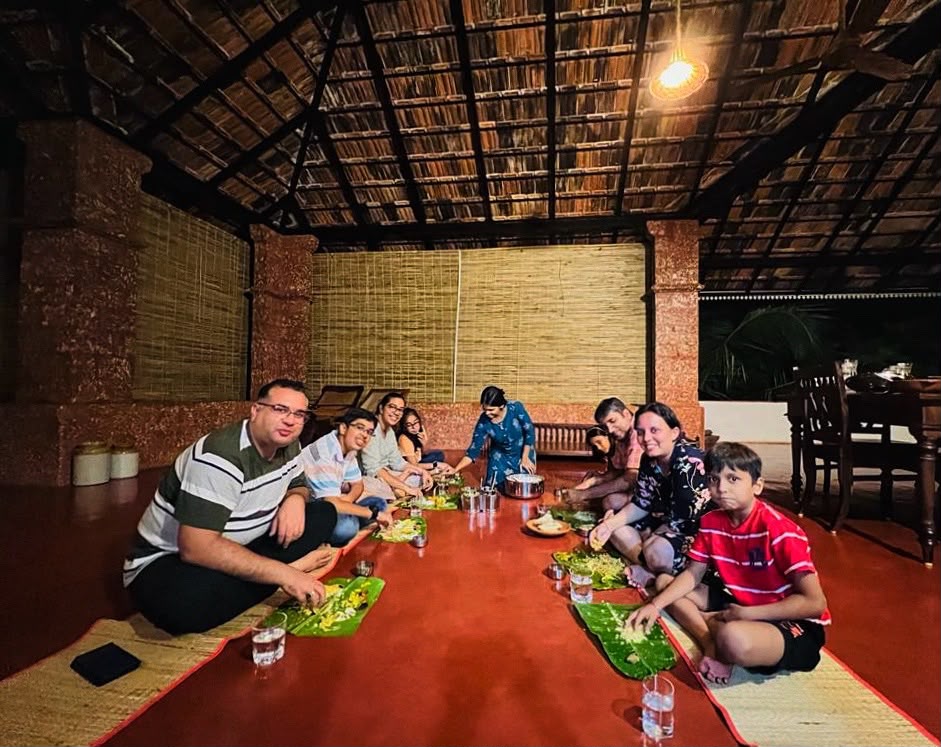
Some of the most meaningful moments at Poothali happen around the table.
Not during a planned experience or an organised activity, but somewhere between a second helping of curry and the last cup of tea. Someone asks a question. A story begins. Another person adds a memory. Soon, people who were strangers a few hours ago are talking as though they have known each other much longer.
That is the beauty of a shared table.
It is also the part of a homestay that is hardest to photograph and hardest to explain in a listing, so this is our attempt to describe it.
A shared table means guests eat the same home-cooked food as the household, at the same table, at a pace set by conversation rather than by service. In North Kerala homestays, it usually happens on an open veranda, and meals often run long after the plates are cleared. It is the main difference between a homestay and a hotel.
A meal often begins with curiosity.
“What is this called?”
“How do you make it?”
“Does everyone here eat this at home?”
A simple question about food can travel surprisingly far.
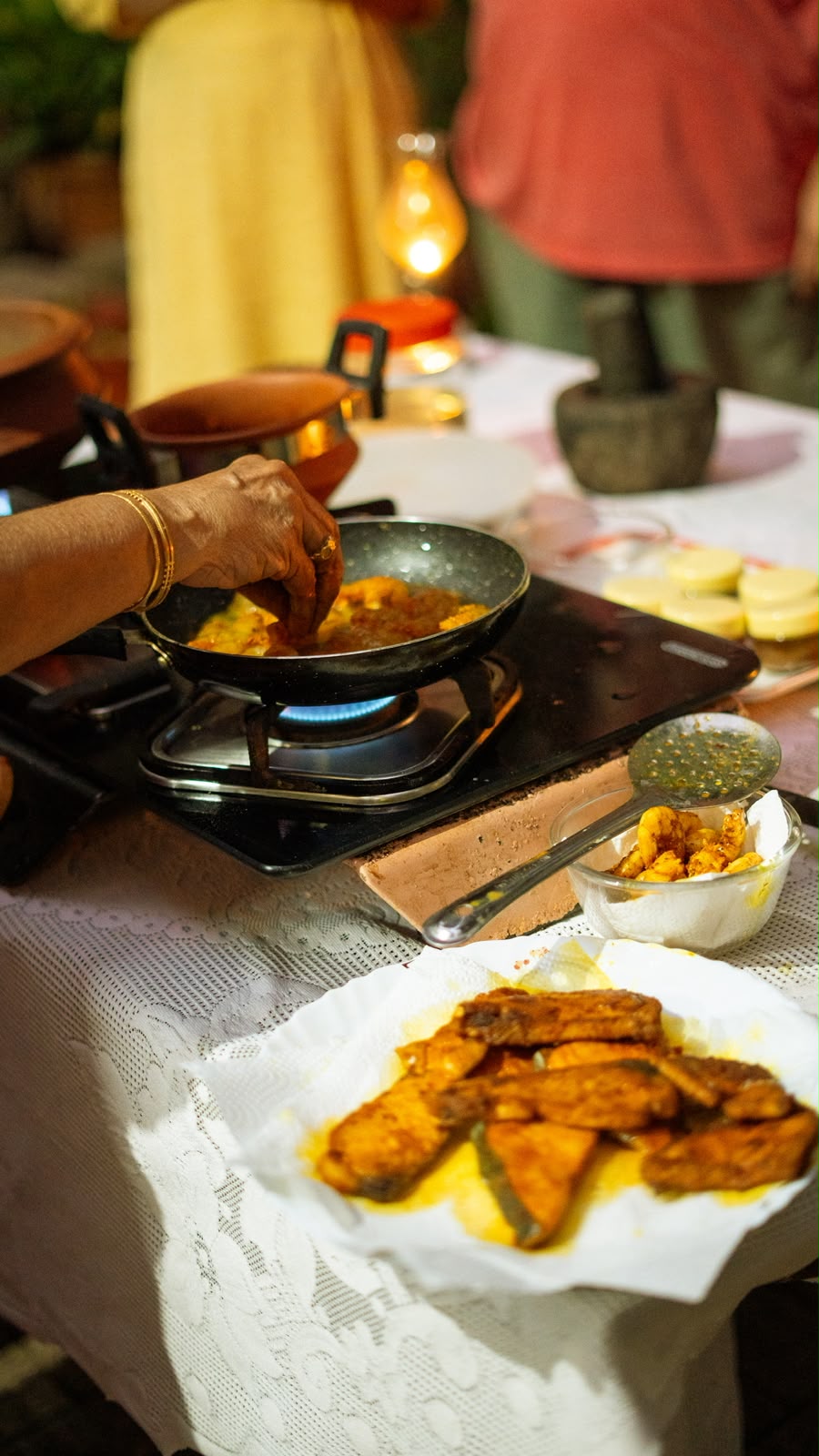
A conversation about puttu and the rest of a traditional North Kerala breakfast may lead to stories about paddy cultivation. A fish curry can bring up memories of local markets and the fishing communities along this coast. A seasonal vegetable may lead someone in the family to explain what used to grow around village homes when they were children, back when almost everything came from the farms a few minutes away.
Food becomes a doorway into the life of the place.
And because the conversation happens naturally, it never feels like a lesson.
The table does not belong only to Poothali.
Every traveller brings a little of their own world with them.
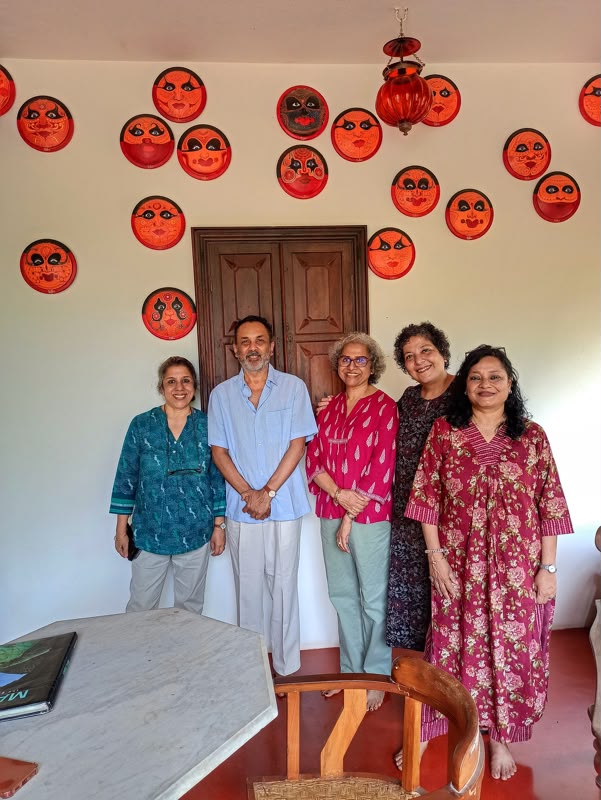
We have conversations about hometowns, family traditions, languages, work, food and journeys taken years ago. Sometimes guests compare a dish on the table with something their grandmother used to prepare. Someone from another country may describe a similar custom from home.
Suddenly, two places separated by thousands of kilometres feel surprisingly close.
That exchange is one of the things we value most about welcoming people into a homestay.
Culture is not something that moves in only one direction.
We share ours. Guests share theirs.
And everyone leaves knowing something they did not know before.
The best conversations rarely follow a plan.
A guest might ask why a particular ritual is performed in the village. Someone else may be curious about Theyyam, farming, the monsoon, or how families celebrated harvest festivals like Puthari decades ago.
Sometimes an elder joins the conversation.
And then the evening changes.
A question that could have been answered in two sentences becomes a childhood memory. That memory leads to another story, perhaps about walking to school through the fields, an old harvest tradition, a temple festival, or a village character everyone still remembers. Occasionally it turns to work, the women whose hands built a quiet economy here, or the crafts that have thinned out over a generation.
These are stories that may never appear in a guidebook.
They live with people.
You only hear them when there is enough time to sit and listen.
Not every conversation around the table happens in the same language.
Malayalam mixes with English. A few words are translated. Gestures fill the gaps. Someone laughs because a pronunciation has gone wonderfully wrong.
This is normal here. Kasaragod is known as Saptha Bhasha Sangama Bhoomi, the land where seven languages meet, Malayalam alongside Tulu, Kannada, Konkani, Marathi, Beary and several tribal tongues. Growing up between languages is ordinary in this district, and it shapes how easily people slip between them at a table. It is also why the culture here carries as much Tulunadu as Kerala, something guests notice within a day of arriving in this stretch of villages.
And somehow, everyone understands.
Hospitality has always had a language beyond words.
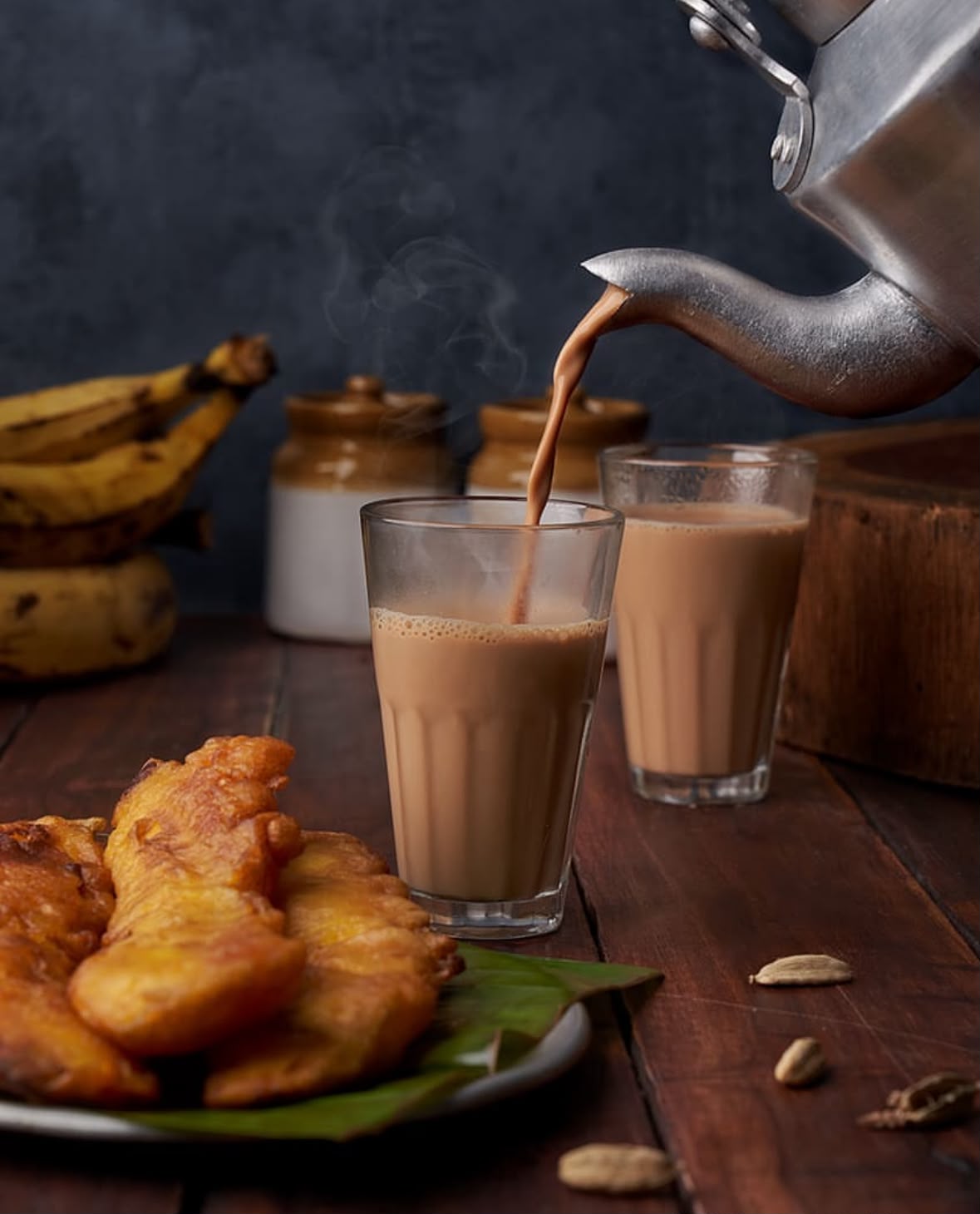
Offering another serving. Passing a dish across the table. Remembering how someone likes their tea. Sitting together for a few extra minutes after everyone has finished eating.
Small gestures often say more than carefully chosen sentences.
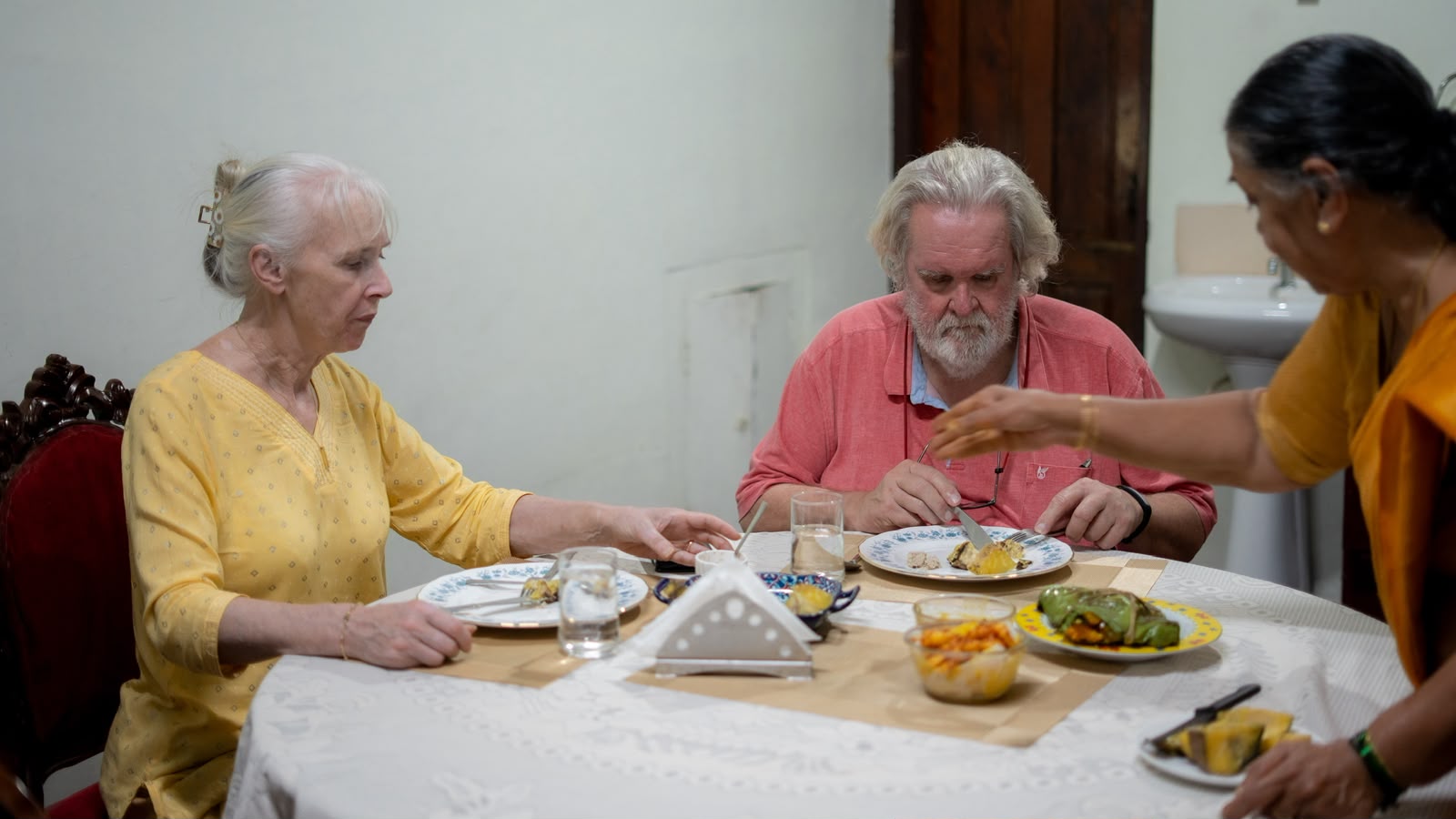
There are evenings when dinner ends but nobody gets up.
Plates have been cleared. Tea has arrived. Outside, the village has grown darker and the sounds from the paddy fields have taken over.
Still, the conversation continues.
People talk about travel, families, old homes, changing villages and the places they hope to see someday.
There is no schedule pushing the evening forward.
These are often the moments we remember most.
Not because anything extraordinary happened, but because people had time for one another.
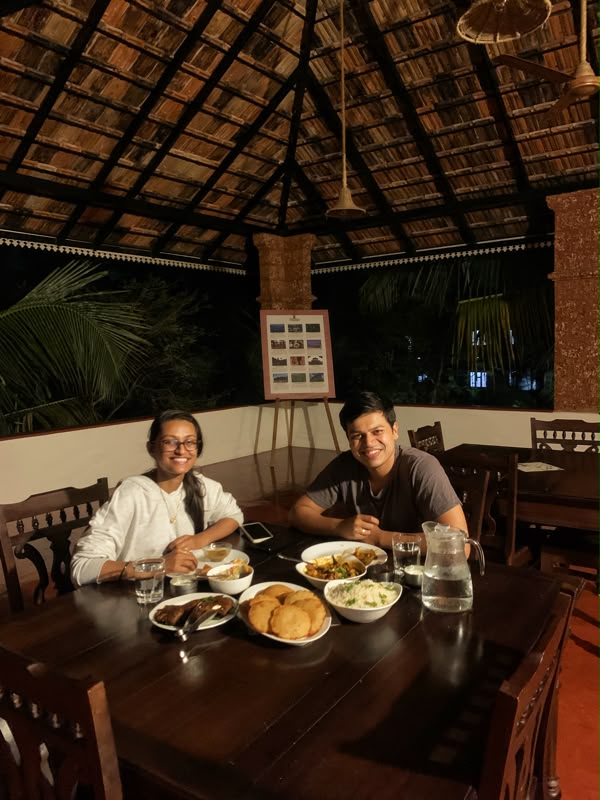
In many traditional homes, the dining table has never been only about food.
It is where families meet after a long day. News is shared. Decisions are discussed. Guests are welcomed. Children listen to stories they may remember decades later.
At a homestay, that same table can become a meeting place between different worlds. A traveller gets to understand a little more about North Kerala, not through a brochure, but through the people who call it home.
And we, in turn, learn something about the places our guests come from.
What a shared table offers that a hotel restaurant cannot
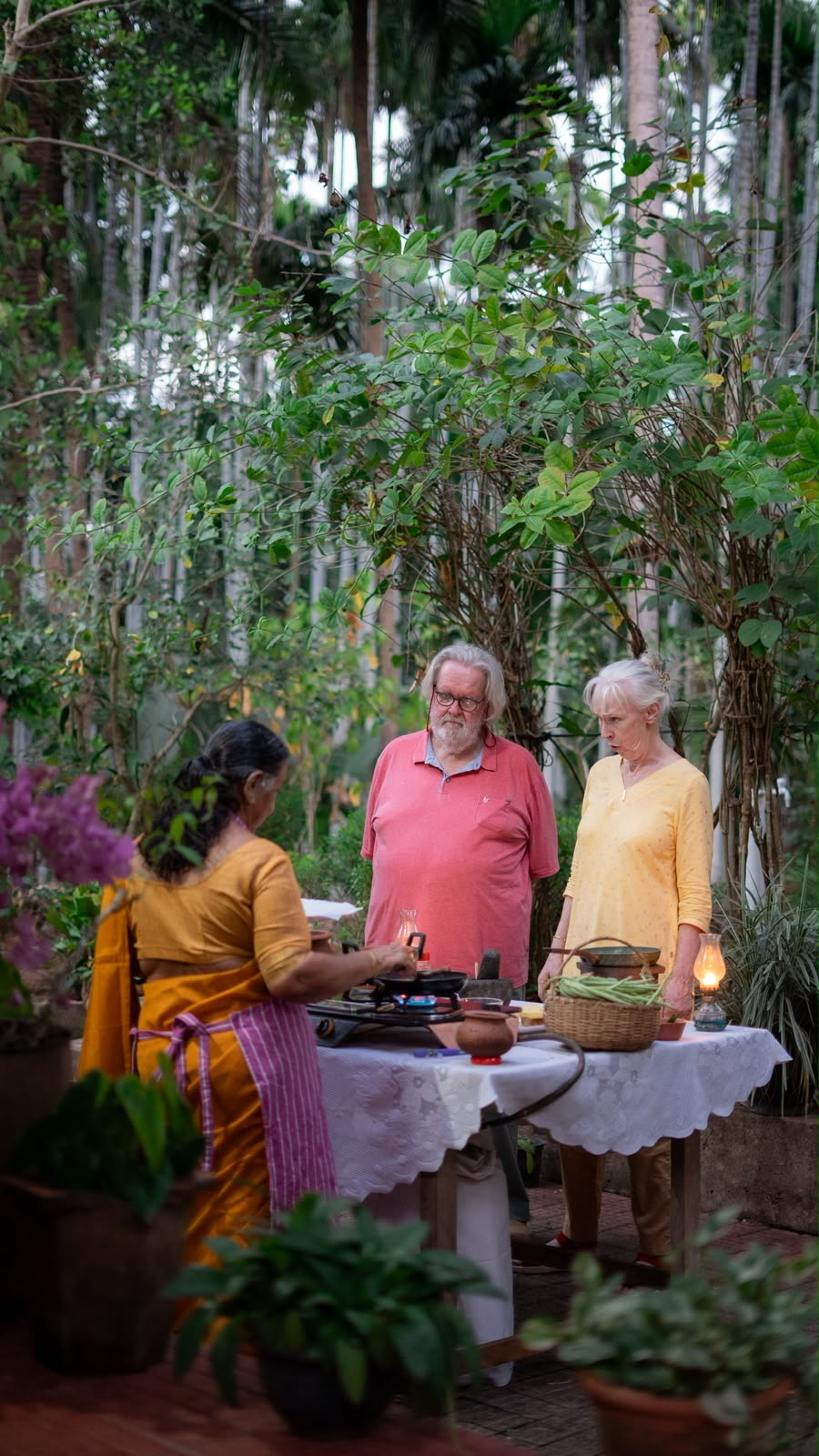
After guests leave Poothali, their room becomes ready for someone new. Bags disappear from the veranda. Another journey begins.
But sometimes, a conversation remains.
We remember the person who told us about a tradition from their hometown. The family who wanted to know the story behind every dish. The guest who sat listening to an elder long after dinner had finished.
These memories become part of Poothali too.
Perhaps that is what a homestay is meant to be.
Not simply a home where someone spends a few nights, but a place where lives briefly meet.
Around a shared table, over food prepared in a familiar kitchen, stories move from one person to another.
And somewhere between eating, listening and laughing together, strangers become a little less strange.
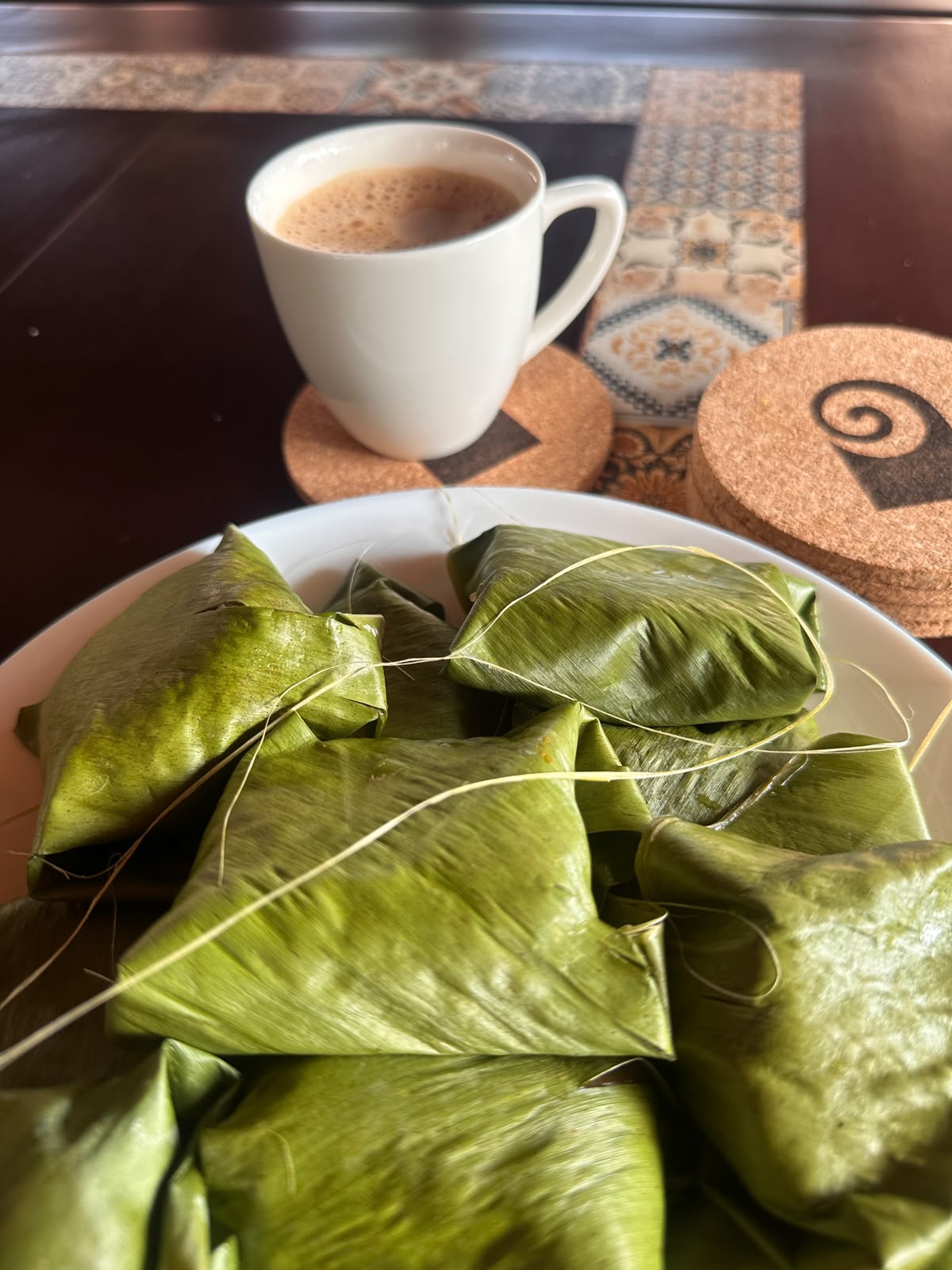
Poothali is an ancestral home in Padannakkad village, near Nileshwar in Kasaragod, looking out over paddy fields. There are three bedrooms, an open veranda laid in red oxide, and a dining table that has been doing this for a long time.
The house was recognised with the Sustainable Leadership award for BnBs and Guesthouses at the Indian Responsible Tourism Awards 2023, a reflection of how the stay is run rather than how it looks in photographs. It is one of the heritage homes still standing beside these fields.
If you are planning a trip, our guide to planning a Kerala village tour covers the practicalities, and the experiences around Poothali fill the hours between meals.
Check availability and book your stay, then come hungry, and stay at the table a while.
Do you eat with the family at a Kerala homestay?
At most family-run homestays in Kerala, yes. Meals are cooked in the household kitchen and served at a common table, and the hosts or family members often sit and eat alongside guests. This is one of the clearest differences between a homestay and a hotel, where dining is a service transaction rather than a shared routine.
Is a homestay better than a hotel in Kerala?
It depends what you want from the trip. A hotel offers privacy, predictability and round-the-clock service. A homestay offers context, home-cooked regional food, conversations with people who live there, and local knowledge you will not find online. Travellers who want to understand a place, rather than simply stay in it, usually prefer a homestay.
Is a shared table awkward if you prefer your own space?
It should not be. A shared table is an invitation, not an obligation. Guests who want a quiet meal are welcome to have one, and good hosts read the difference easily. Most people find that a single conversation over tea changes how the rest of the stay feels.
What language is spoken in Kasaragod?
Kasaragod is called Saptha Bhasha Sangama Bhoomi, the land where seven languages meet. Malayalam is the primary language, spoken alongside Tulu, Kannada, Konkani, Marathi, Beary and several tribal languages. English is widely understood at homestays, and most table conversation moves between languages without much effort.
What do guests and hosts usually talk about at a homestay?
It usually starts with food and travels outward, how a dish is made, what grows locally, why a village ritual is performed, what Theyyam season looks like, how the area has changed. Guests share their own traditions in return, which is what makes the exchange worth having.
Where is Poothali homestay located?
Poothali is in Padannakkad village near Nileshwar, in Kasaragod district, North Kerala. It sits beside paddy fields and is within reach of Bekal Fort, the Valiyaparamba backwaters, Theyyam shrines and the pottery and bell-metal villages of the region.