

Blog
Blog

A souvenir means more when you know whose hands made it.
Around Poothali, some of the things guests choose to take home begin in small workshops, at looms, beside potter’s wheels, and in the hands of local artists. They are useful, imperfect in the nicest way, and closely connected to the everyday craft traditions of North Kerala.
A handwoven bath towel. A piece of local pottery. A Theyyam face carefully painted onto clay.
Each carries a little story of the person who made it.
The most characteristic souvenirs of North Kerala are handwoven cotton textiles, village pottery, and clay pieces painted with Theyyam faces. All three are made by hand in and around Kasaragod district, usually in small family workshops rather than factories. They are inexpensive, useful rather than decorative, and the money goes directly to the person who made them.
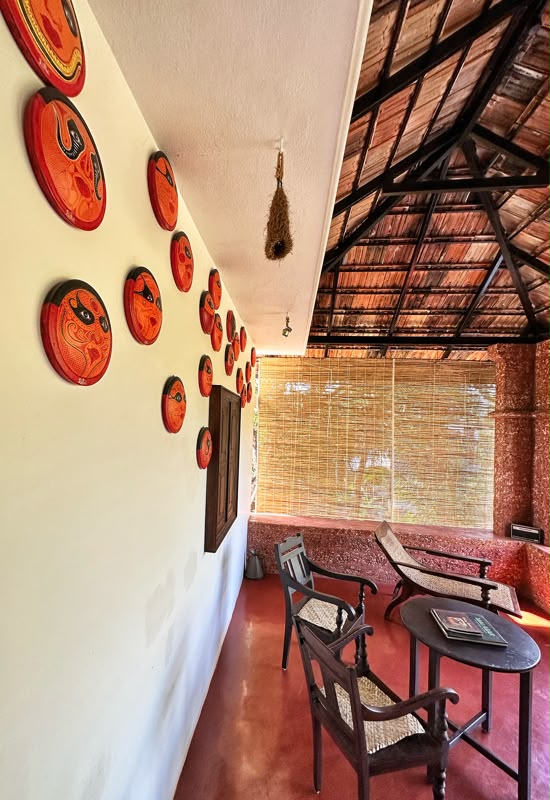
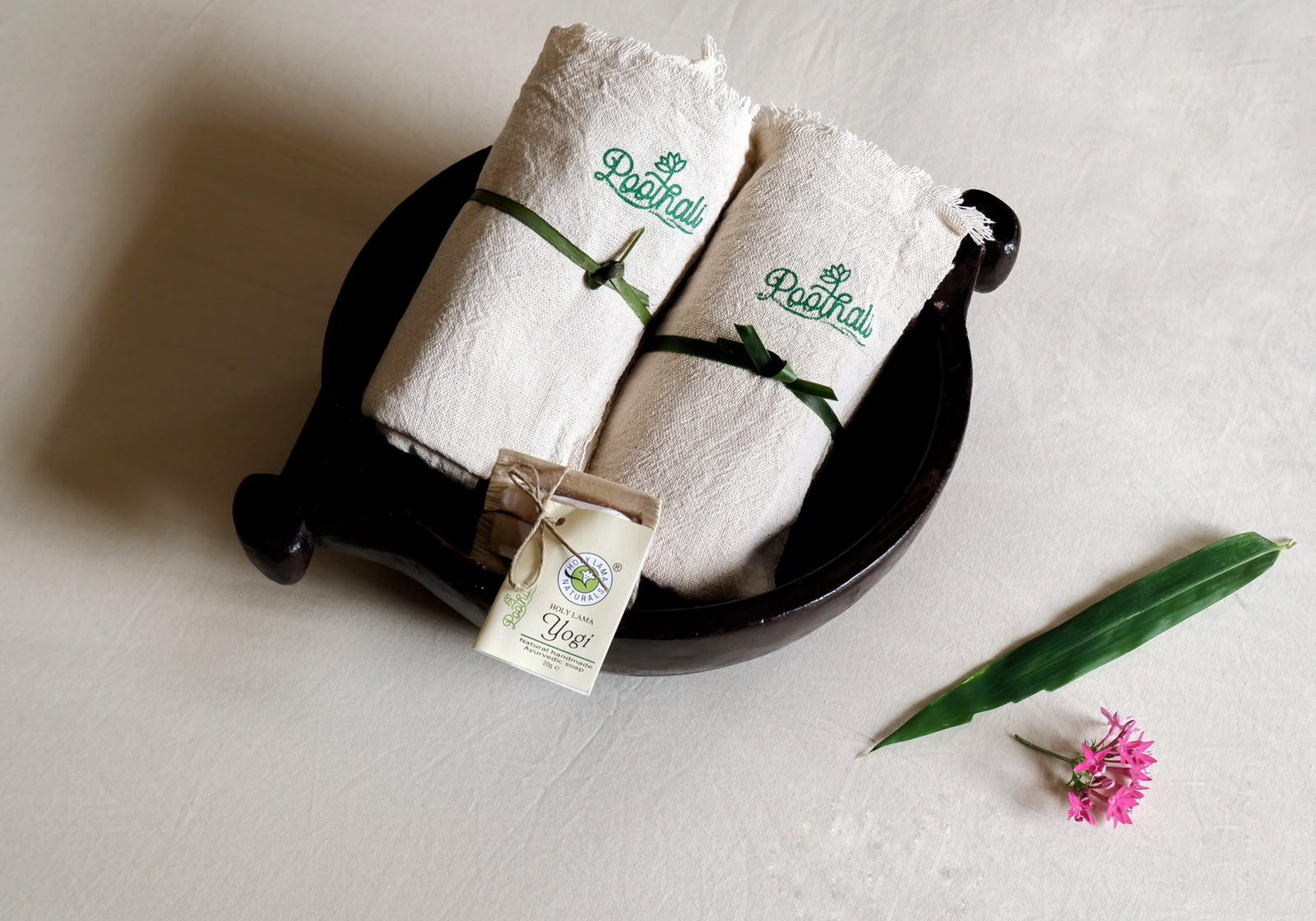
A bath towel may seem an unlikely souvenir.
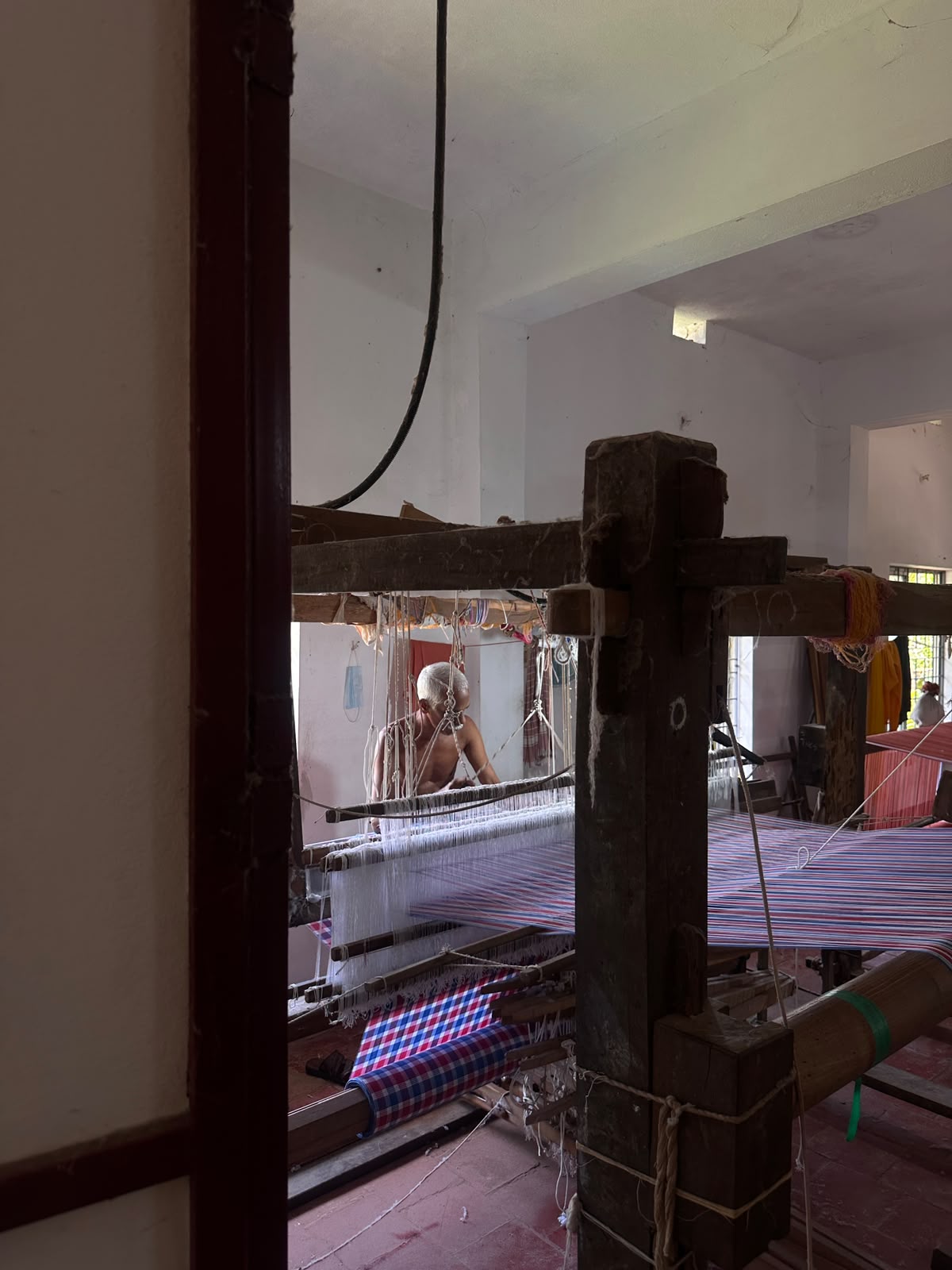
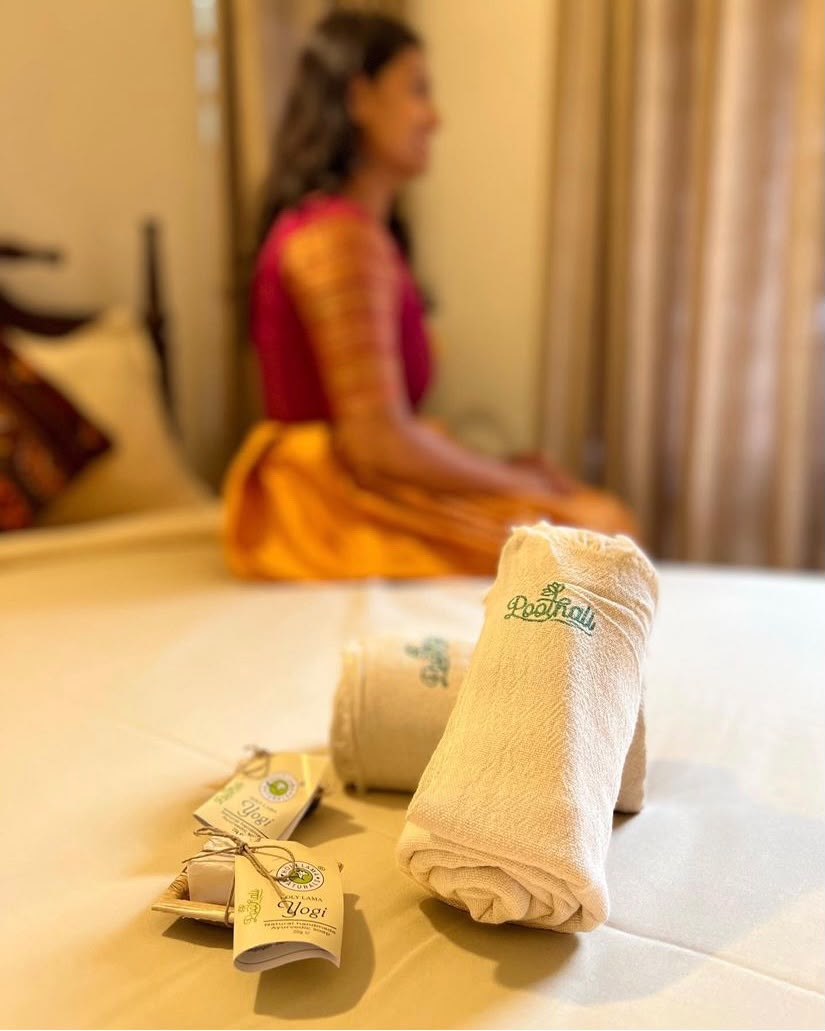
But the locally made cotton towels found around this part of Kerala have been part of everyday homes for generations. Light, absorbent and comfortable in the tropical weather, they are woven for use rather than display. Look closely and the details begin to show — the weave, the texture of the cotton, and the small variations that distinguish something made locally from something produced by the thousands.
We have written separately about how these towels are made, thread by thread, on looms a short walk from the house. Here it is enough to say that taking one home is a simple way of carrying a piece of daily Kerala life with you.
And perhaps months later, when that familiar towel is hanging in a bathroom far from Poothali, there is a small reminder of mornings here — the paddy outside the window, the sound of birds, and that first cup of tea.
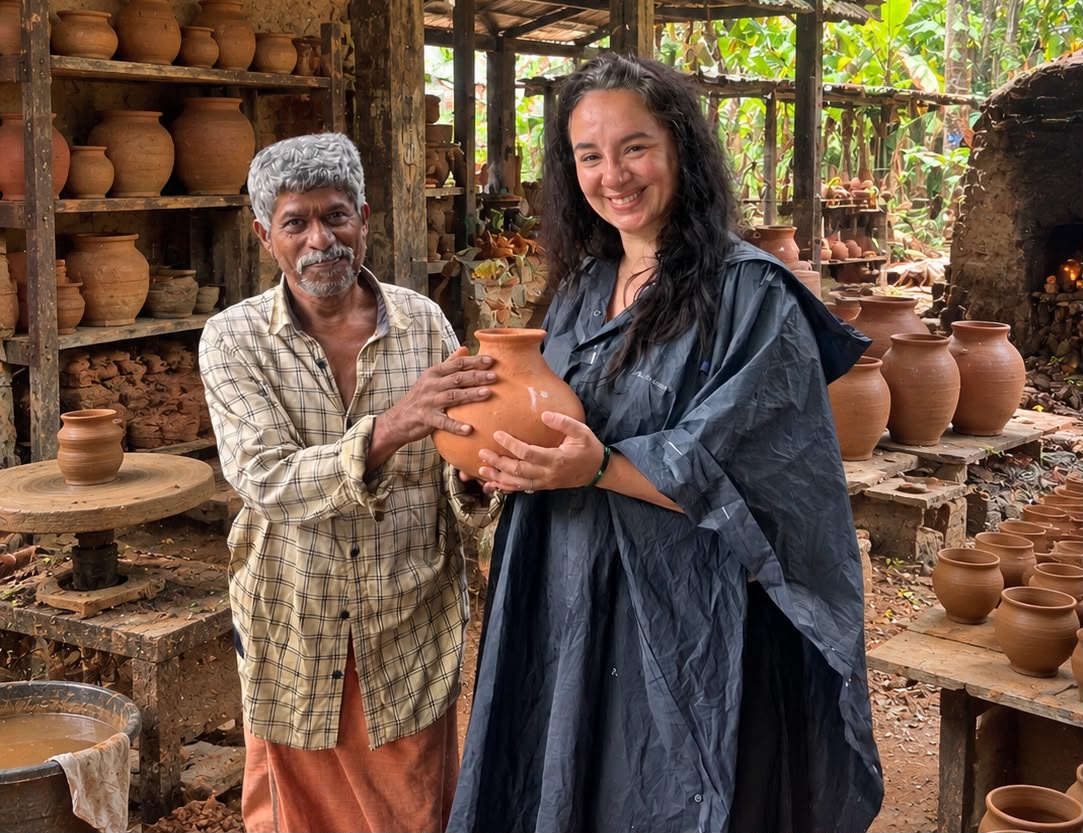
Pottery has an immediacy that is difficult to replicate.
Clay begins as earth. On the wheel, under a potter’s steady hands, it slowly becomes something recognisable — a bowl, a cup, a lamp, a vessel.
There is skill in making something look this simple.
What separates village pottery from a factory piece
Years of repetition allow the hands to understand what the clay needs, often without measurement.
Local pottery also tells us something about an older way of living. Clay vessels once had a natural place in kitchens and households, used for cooking, storing water, and serving food — the same kind of kitchen that still turns out a traditional North Kerala breakfast every morning.
Today, a small piece of pottery taken home by a traveller keeps a connection with that tradition alive.
Some of the most striking pieces guests encounter are born when two local traditions meet.
A potter first shapes the clay.
Then an artist gives it another identity.
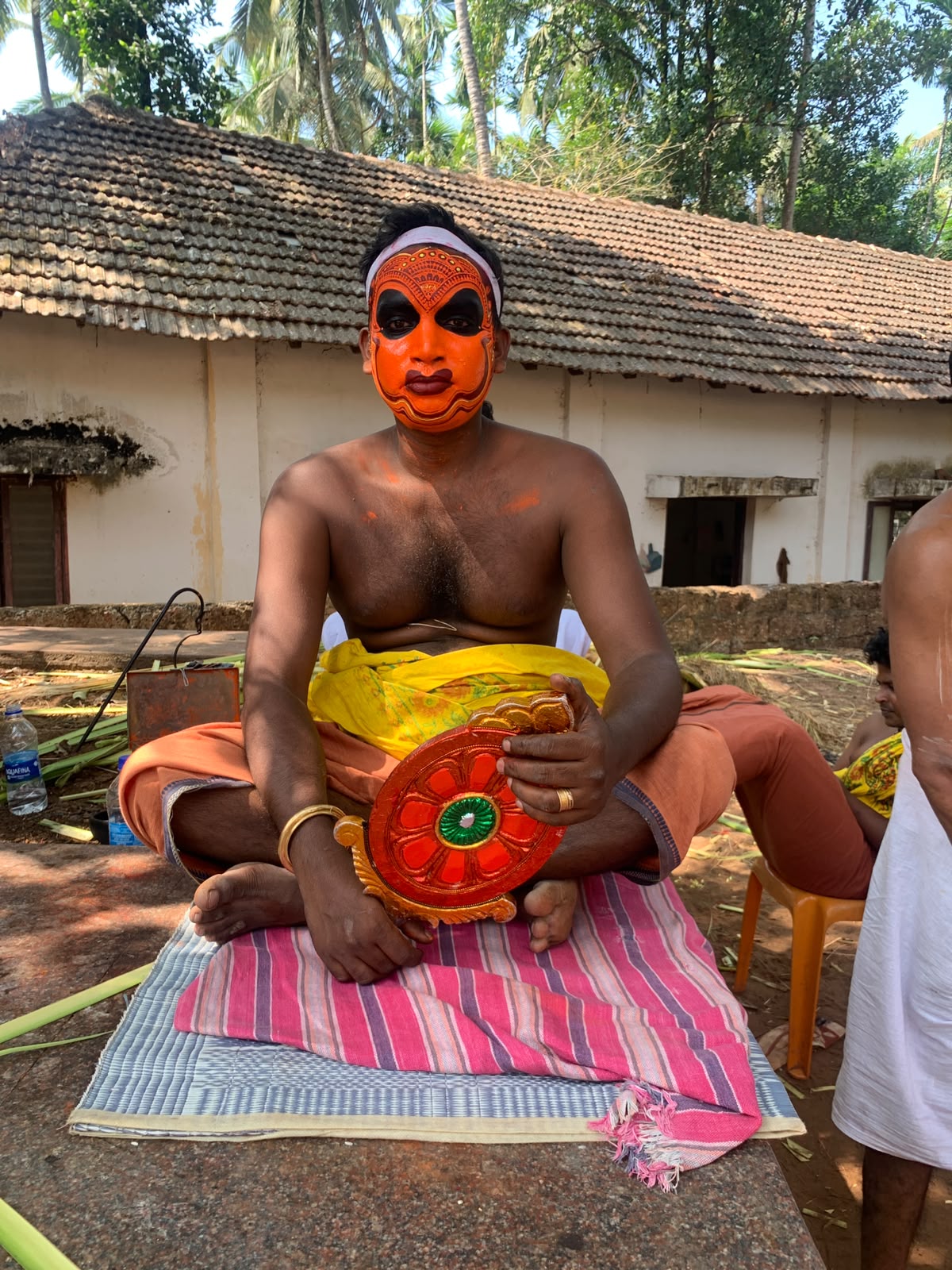
The face of Theyyam is painted onto the pottery by hand — the strong lines, expressive eyes and intricate patterns recalling one of North Kerala’s most powerful ritual traditions.
For people from this region, Theyyam is much more than a colourful image. It belongs to the sacred spaces, communities and ancestral traditions of Malabar, in a district shaped as much by Tulunadu as by Kerala. During the Theyyam season, elaborate makeup, headgear, fire, drums and ritual transform familiar village spaces into places of extraordinary intensity.
Painting a Theyyam face onto locally made pottery therefore carries a responsibility. It is not simply a decorative motif borrowed for its beauty. At its best, it becomes a respectful acknowledgement of a living tradition and of the artists and communities who continue to carry it forward.
Every painted face is slightly different because every one passes through human hands.
That difference is part of its beauty.
It is easy to look at a finished object and forget how many decisions came before it.
Someone selected the cotton and worked the loom.
Someone prepared the clay.
Someone centred it on a wheel and shaped it.
Someone waited for it to dry and fired it.
Someone held a brush and slowly painted the fine details of a Theyyam face.
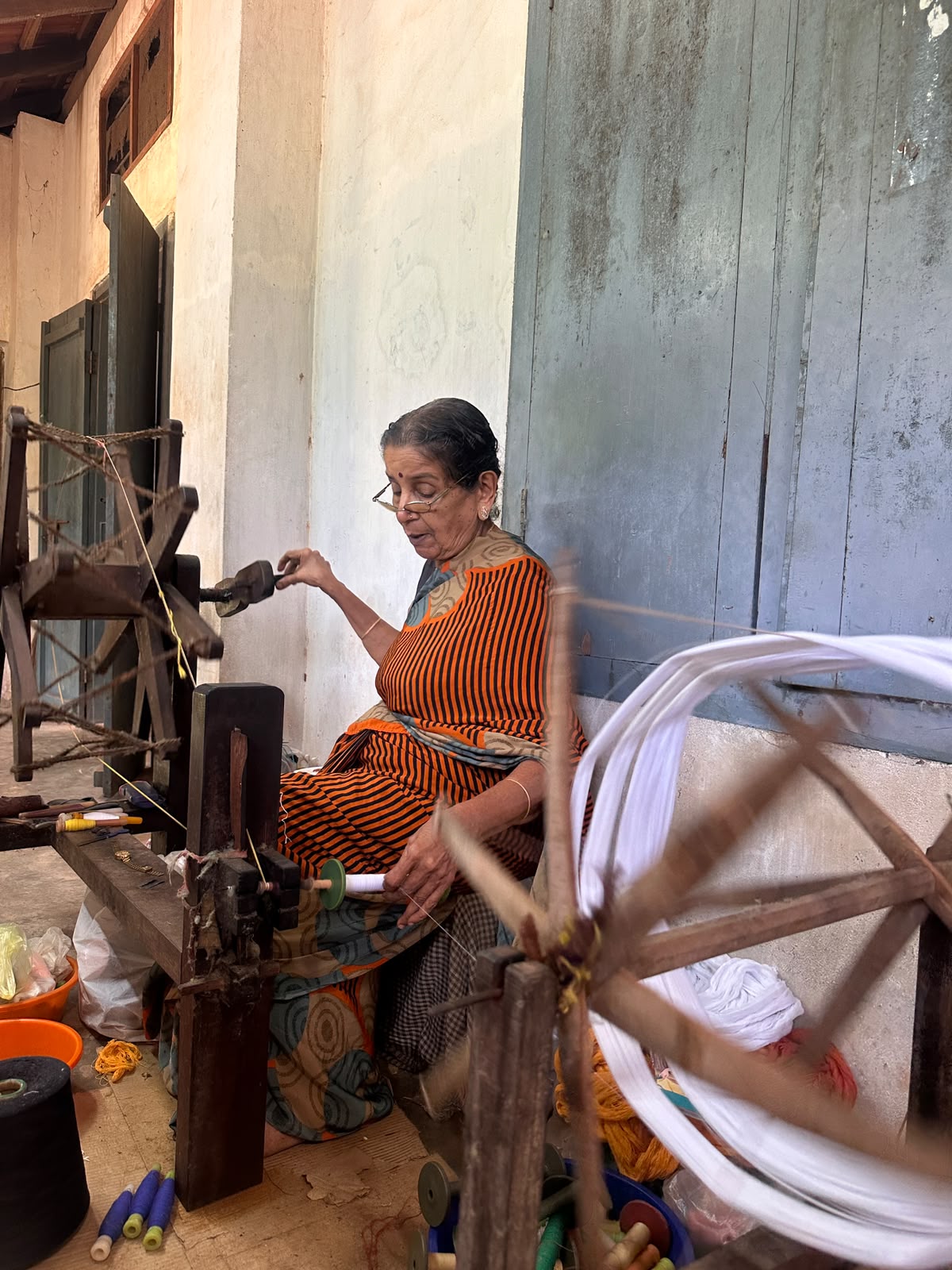
These are ordinary working lives, not performances for visitors — the same quiet economy that shows up in the beedi-rolling homes around the village.
When guests meet the people behind these objects, or simply hear their stories, the meaning of the souvenir changes.
You are no longer choosing just a towel or a pot.
You are recognising someone’s skill.
Local crafts survive when they remain part of everyday life.
That does not always require grand efforts. Sometimes it is as simple as choosing a towel woven nearby instead of one that has travelled hundreds of kilometres. Or placing a handmade clay cup on the breakfast table. Or asking who painted the piece of pottery you are holding.
Small choices create reasons for skills to continue.
How to buy craft responsibly in Kerala
Choices like these also allow tourism to have a more personal relationship with the community around it, which is much of what running this place responsibly actually means in practice. The things visitors take home can support the people who make them while introducing their work to homes and conversations far beyond the village.
There are souvenirs that tell you where you travelled.
And there are souvenirs that remind you how a place felt.
We like the second kind.
A locally woven towel becomes softer with use. A handmade pot finds a place on a shelf or dining table. A Theyyam face painted on clay may lead a curious friend to ask, “What’s the story behind this?”
And suddenly you are talking about North Kerala.
About a potter and an artist.
About Theyyam nights filled with drums and fire.
About mornings beside the paddy fields.
About the people you met around Poothali.
Perhaps that is the nicest thing an object brought home from a journey can do.
It keeps a conversation with the place alive.
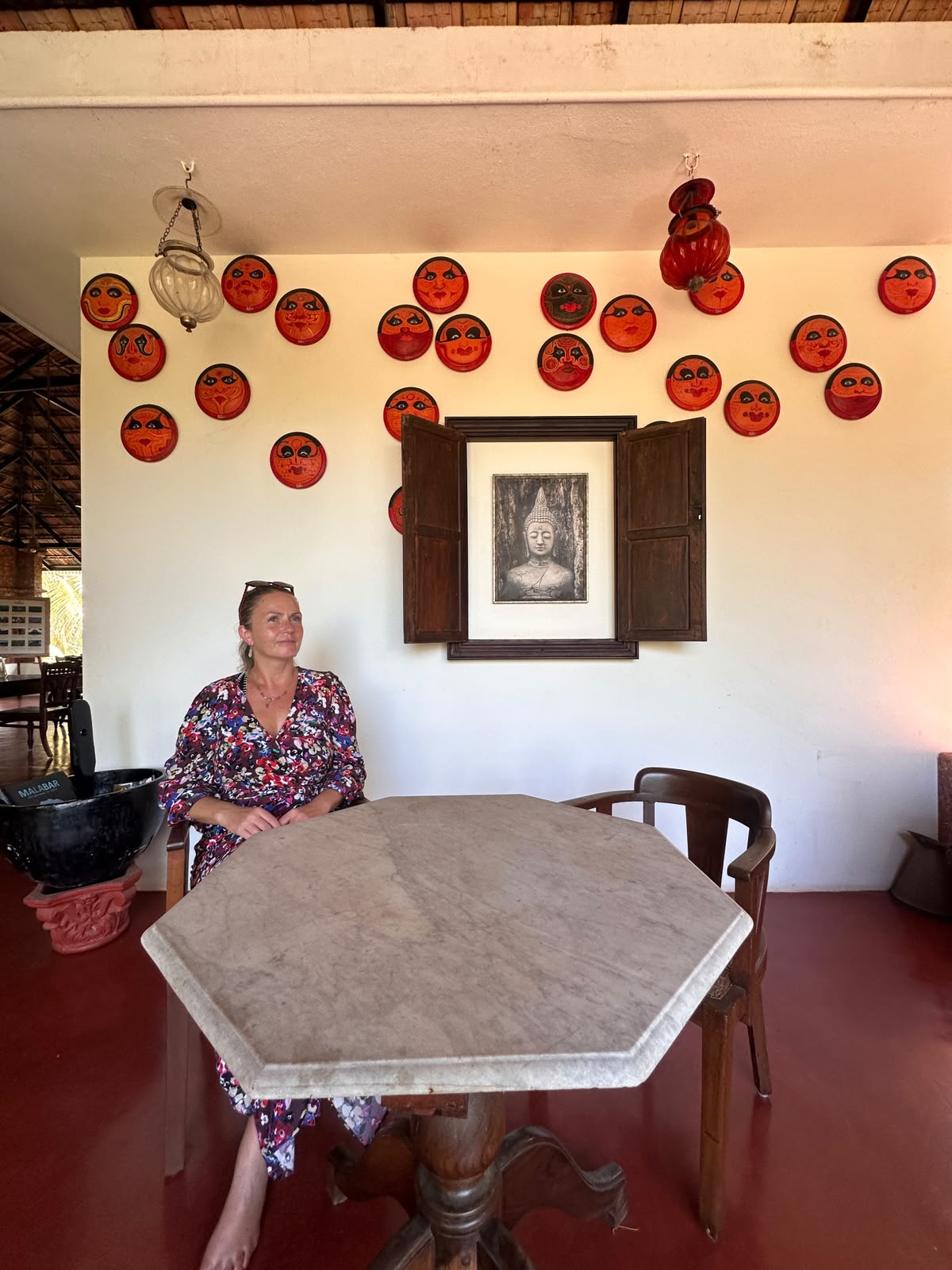
Poothali is an ancestral home in Padannakkad village, near Nileshwar in Kasaragod. The looms, the potter’s wheels and the artists who paint them are not attractions with ticket counters — they are working households, most of them within a short walk or a short drive.
Guests who want to meet the makers usually do it as part of a village walk, which our guide on experiences around the house can be arranged around whatever is happening in the village that week, and the road in is worth taking slowly.
The house itself is one of the heritage homes still standing beside these fields, and it was written up in Condé Nast Traveller for much the same reasons guests come back: the people, the food and the village around it.
Poothali is run entirely by women from the village, so the argument for keeping skilled work close to home is not an abstract one here. It is how the house itself operates.
See our rooms or check availability and book your stay.
What souvenirs should I buy in North Kerala?
Handwoven cotton textiles, village pottery and clay pieces painted with Theyyam faces are the most characteristic. Beyond those, coconut-shell items, cane and bamboo work, and locally milled coconut oil and spices travel well. The rule of thumb is to choose things that are made nearby and meant to be used.
Where can I buy handmade pottery in Kerala?
The best pieces are usually bought from the potter rather than from a shop. In and around Kasaragod district, small family workshops sell directly, and handicraft cooperatives and government emporiums stock local work at fixed prices. Staying at a village homestay makes it easier to be introduced to makers directly.
Is it respectful to buy Theyyam art as a souvenir?
Yes, when it is bought with awareness. Theyyam is a living ritual tradition, not simply a decorative motif, so buying from artists connected to the tradition matters, as does knowing what the image represents. Treated that way, taking a painted piece home supports the artists and helps carry the tradition further.
What is Theyyam?
Theyyam is a ritual art form of North Kerala in which a performer takes on the form of a deity through elaborate makeup, costume, headgear, drumming and fire. It is performed at village shrines and sacred groves across Kasaragod and Kannur, mostly between December and May, and is an act of worship rather than a staged show.
Are handwoven Kerala cotton towels worth buying?
They are, particularly for warm weather. Handwoven cotton is light, highly absorbent and gets softer with every wash, and the small irregularities in the weave are a sign of handwork rather than a flaw. They are also inexpensive and pack flat, which makes them one of the easiest crafts to carry home.
How can travellers support local artisans in Kerala?
Buy directly from makers or cooperatives, ask who made the piece, avoid haggling handmade prices down hard, and choose useful objects over ornamental ones. Staying in locally owned accommodation and joining village walks that visit working households keeps more of the money within the community.